Set out on a journey along the Thames Path National Trail, a captivating 185-mile route tracing the River Thames from its source near Kemble in Gloucestershire to the Thames Barrier in southeast London. Along the way, you’ll experience a blend of serene countryside, historic towns, and the vibrant heart of London, all connected by this iconic waterway. Whether you’re seeking a leisurely day-hike or a long-distance multi-day trek, the Thames Path offers something for walkers of all levels. Pick a section below to get started!
Thames Path Map
Below you’ll see a map of the Thames Path in its entirety (from Thames Head near Kemble, Gloucestershire, to the Thames Barrier in Greenwich). If you’d like to see more specific maps for individual sections, then visit our Thames Path sections page for additional information.
What to Expect Along the Thames Path
Accessibility & Waymarking
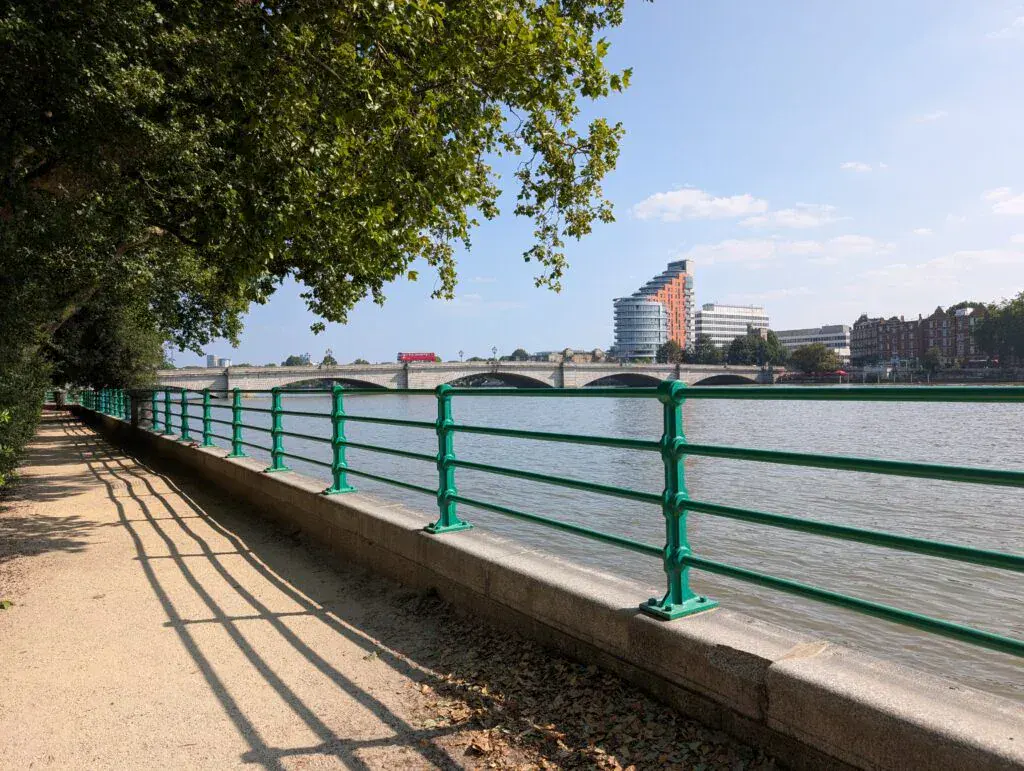
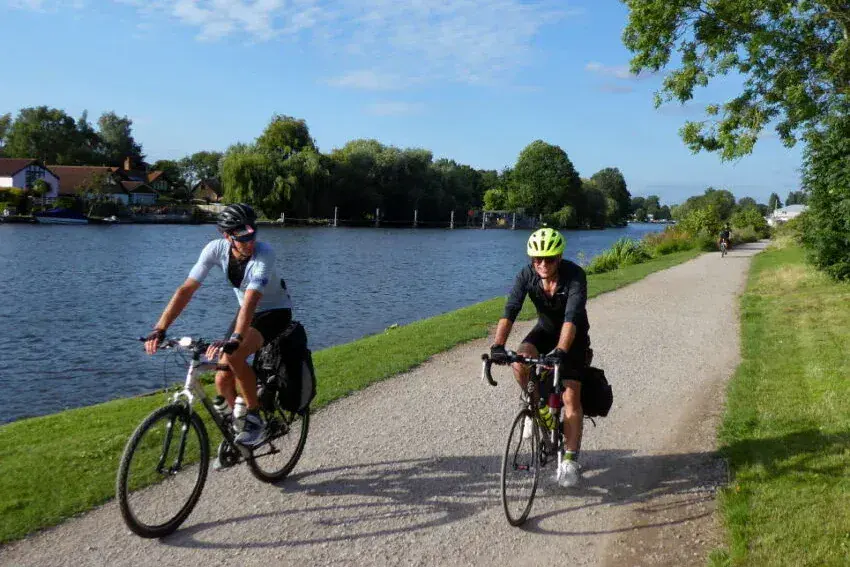
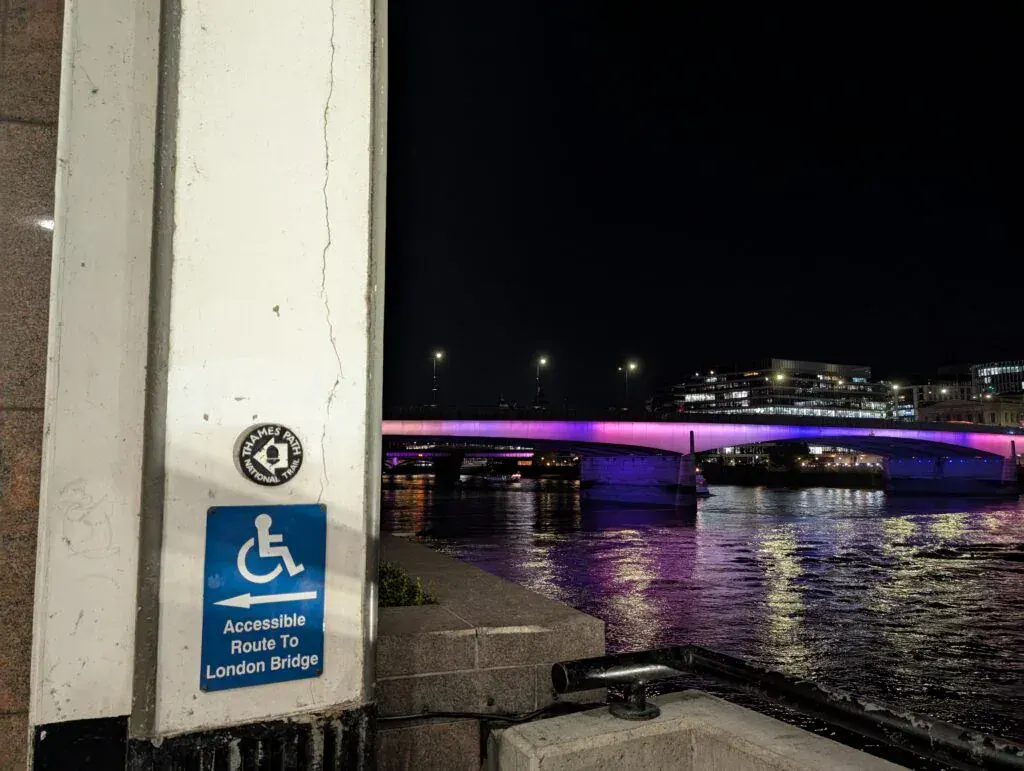
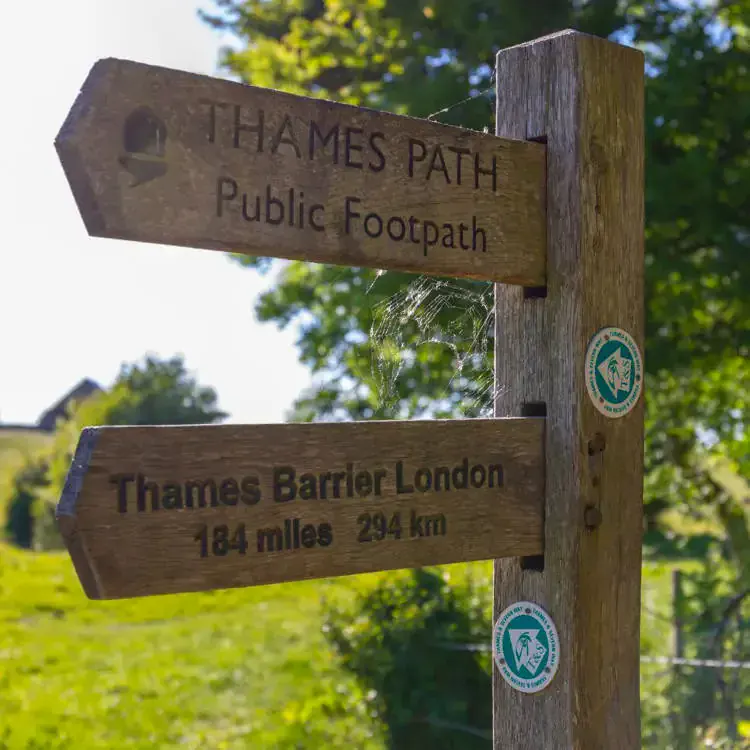
The Thames Path is well-maintained and mostly flat, making it suitable for walkers of all ages and abilities. It’s clearly waymarked with the National Trail acorn symbol and can be walked in either direction. Some sections are even suitable for wheelchair users and cyclists, particularly in urban areas.
Sections and Planning
The entire trail can be walked over roughly two to three weeks, but many visitors choose to explore it in sections. Convenient rail and bus links mean you can tackle the path at your own pace, starting and ending wherever suits your schedule.
Accommodation and Facilities
There’s no shortage of places to stay along the Thames Path, from countryside B&Bs and historic inns to riverside hotels and campsites. Towns along the route are well-equipped with shops, pubs, and amenities. Whether you’re after a gourmet meal or a packed lunch from a local bakery, you’ll be well-catered for. Visit our accommodation page for more information.

Highlights of the Thames Path
The Thames Path boasts a wide selection of iconic British landmarks. Along its 185-mile stretch, you’ll encounter centuries of architecture, politics and royalty. From Roman ruins and Norman towers to Victorian bridges and contemporary architecture, the Thames Path connects you with the historical heartbeat of England.
Oxford: Home to one of the world’s most prestigious universities, Oxford’s skyline is dominated by elegant stone towers and historic colleges. Visitors can explore the Bodleian Library, Christ Church (filming location for Harry Potter), and the 1,000-year-old Oxford Castle.
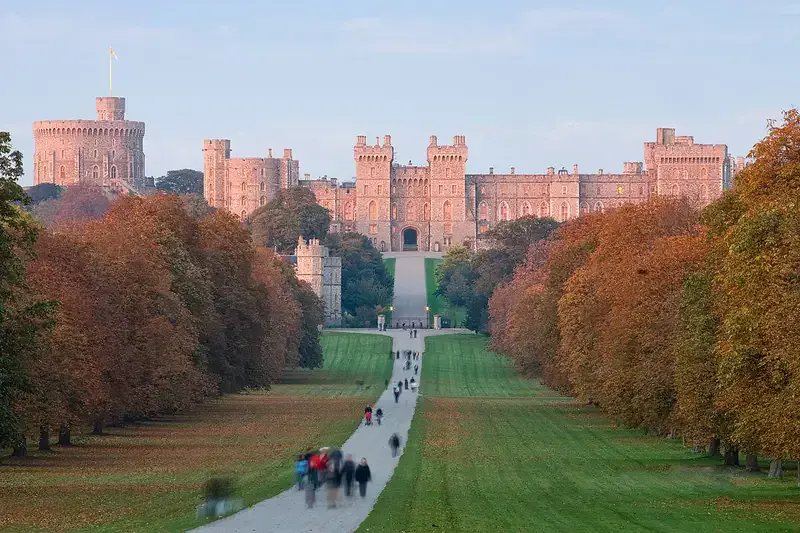
Windsor Castle: An icon of British royalty, Windsor Castle is the oldest and largest occupied castle in the world. Founded by William the Conqueror in the 11th century, it remains an official residence of the monarchy.
Runnymede: This peaceful riverside meadow holds monumental importance. It was here in 1215 that King John sealed the Magna Carta, laying the foundations for modern democracy and legal rights. Today, you can visit the Magna Carta Memorial and nearby art installations, such as The Jurors.
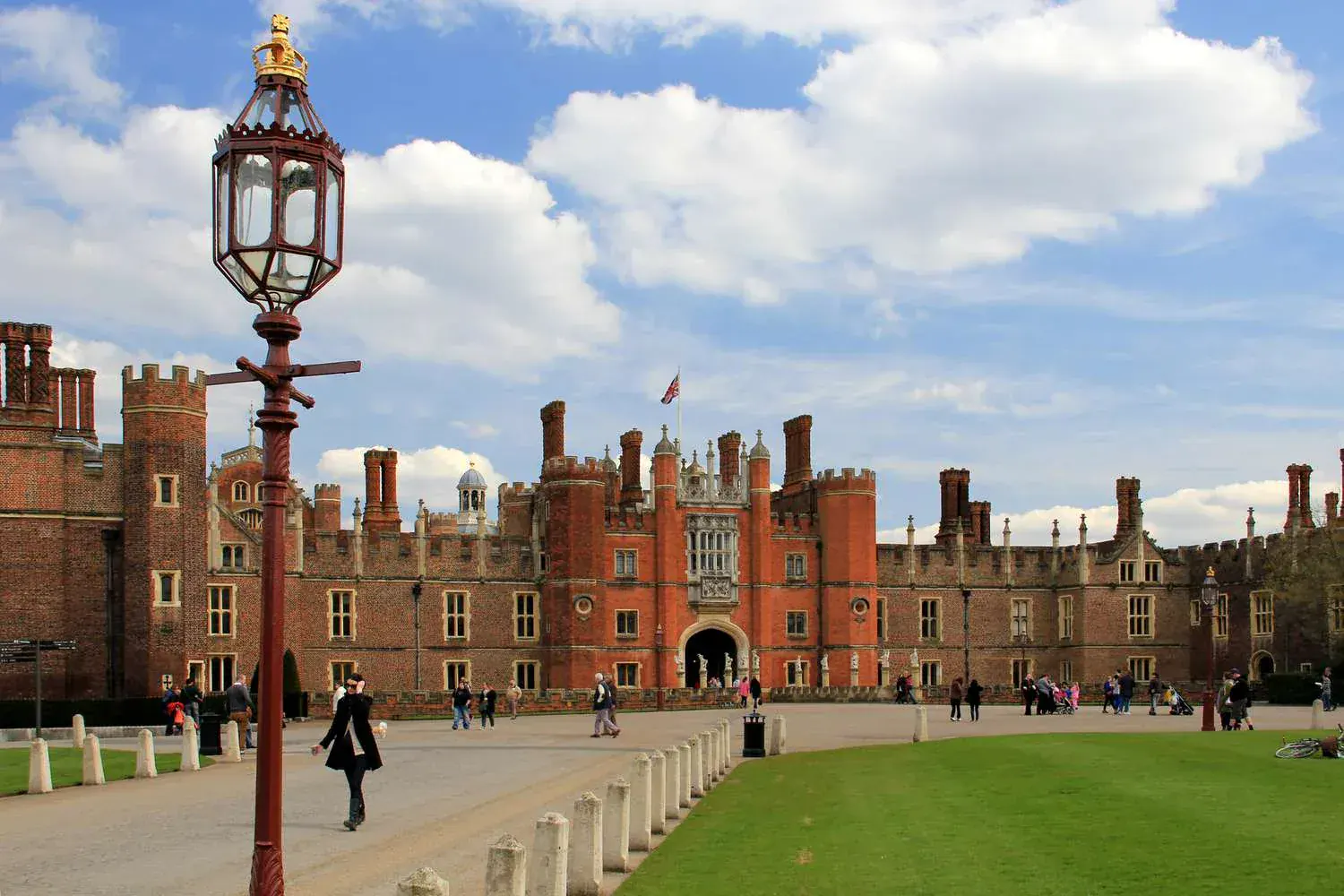
Hampton Court Palace: A Tudor masterpiece that once housed King Henry VIII, Hampton Court is a must-visit for history lovers. Wander through opulent rooms, the famous hedge maze, and magnificent formal gardens.
Houses of Parliament and Big Ben: As the trail winds into central London, it brings you face-to-face with iconic landmarks like the Palace of Westminster. This UNESCO World Heritage Site stands proudly on the north bank of the river and is an emblem of British governance and history.
Tower of London: Just a little further downstream, the path passes the Tower of London, infamous for its bloody history, royal intrigue and the Crown Jewels.
Nature and Wildlife
The Thames Path is a haven for nature lovers. Along your journey, you’ll encounter an astonishing diversity of landscapes, including wetlands, ancient woodlands, and wildflower meadows. Birdwatchers will enjoy spotting herons, kingfishers, and red kites. Otters and water voles also inhabit parts of the river, especially in quieter, rural stretches.

Many areas along the trail are managed for conservation, including nature reserves such as the Cholsey Marsh and Hurst Park. Spring and early summer are particularly rewarding times to visit, with blooming flora and increased wildlife activity.
Frequently Asked Questions
Completing the full 185-mile trail typically takes between 14 to 20 days, depending on your pace and daily distance covered.
Certain sections of the Thames Path are accessible for cyclists, particularly in urban areas. However, some parts are designated for pedestrians only. For more information, visit our page on cycling the Thames Path.
Other National Trails to Consider
Cleveland Way – A 109-mile horseshoe-shaped trail combining heather moorland of the North York Moors with dramatic North Sea cliffs.
Cotswold Way – A 102-mile route through rolling countryside, villages and historic sites such as Bath Abbey.
Hadrian’s Wall Path – A 84-mile coast-to-coast trail following the line of the Roman frontier.
North Downs Way – A 153-mile trail from Farnham to Dover, following chalk ridges and ancient Pilgrims’ routes. It offers sweeping countryside views, the historic Canterbury Cathedral and the White Cliffs of Dover.

South Downs Way – A 100-mile chalk ridge walk from Winchester to Eastbourne. One of the most popular National Trails for day hikes.
Offa’s Dyke Path – A 177-mile trail tracing the England–Wales border along the ancient earthwork built by King Offa. It passes through varied landscapes, from the Clwydian Hills to the Black Mountains.
The Ridgeway – Often called “Britain’s oldest road,” this 87-mile trail runs from Avebury in Wiltshire to Ivinghoe Beacon in Buckinghamshire. Following a chalk ridge, it offers sweeping views, Iron Age forts, and ancient landmarks like the Uffington White Horse.
Useful Links
The Outdoor Guide – Curated walks across Great Britain and Ireland from Julia Bradbury.
Walk the Thames – Providers of a range of bespoke Thames Path walking holidays.
Walking Englishman – Features a variety of maps and GPX files on different long distance walks across the UK.